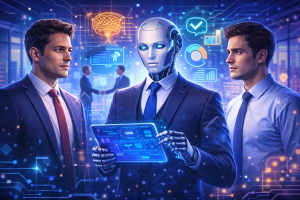
The modern office looks very different from what it did a decade ago. While open-plan layouts and remote work once dominated workplace conversations, a more subtle force is now transforming professional environments: Artificial Intelligence. This transformation is not simply about automating repetitive tasks. It represents a broader shift in expectations, workflows, communication styles, and decision-making structures within organizations.
As companies integrate AI-powered tools, traditional hierarchies often become more flexible. Information moves more quickly across departments, and established routines are increasingly replaced by agile, data-informed processes. Understanding how these technologies influence workplace behavior is essential for leaders aiming to build resilient and future-ready teams.
The Shift Toward Data-Driven Transparency
One of the most visible impacts of AI adoption is improved access to data. Previously, high-level insights were often limited to senior leadership. Today, AI-driven dashboards and analytics platforms provide real-time metrics to employees across multiple levels of an organization. This accessibility encourages decision-making based on measurable outcomes rather than assumptions or seniority alone.
Greater transparency can strengthen trust within teams. When employees understand the reasoning behind strategic changes, alignment improves. However, this shift also requires increased data literacy. The competitive advantage no longer belongs solely to those who possess information, but to those who can interpret and apply it effectively.
Redefining Productivity and Employee Perks
As AI systems handle repetitive administrative work, the concept of productivity is evolving. Instead of measuring performance strictly by hours spent at a desk, organizations are placing greater emphasis on innovation, collaboration, and problem-solving capabilities. Output quality and strategic thinking are becoming more valuable metrics than simple task completion.
This shift also influences how companies approach employee engagement. Modern professionals often value seamless digital experiences in both work and personal environments. For example, outside the workplace, some individuals explore digital entertainment platforms that offer HitNSpin no deposit bonuses as a way to experience new games without financial commitment. Such activities, when approached responsibly and within legal guidelines, reflect a broader preference for flexible, digital-first experiences.
By recognizing that employees are digitally fluent consumers outside of work, organizations can better understand evolving expectations around usability, efficiency, and convenience. This awareness can inform better workplace tools and communication strategies without promoting or endorsing any specific external activity.
Collaboration in the Age of Virtual Assistants
Internal collaboration has also been reshaped by AI. Project management systems now predict potential delays, automate task tracking, and provide real-time updates. AI-powered meeting tools can summarize discussions and extract key action points, helping reduce administrative overhead.
Brainstorming processes are evolving as well. AI tools can generate draft ideas, frameworks, or outlines that teams refine and improve. In this model, employees shift from being sole creators to becoming evaluators, editors, and strategic decision-makers. The emphasis moves toward judgment, creativity, and contextual understanding.
Traditional Culture versus AI-Enhanced Culture
Decision Making: Previously top-down and experience-based; now increasingly decentralized and data-informed.
Primary Tasks: Formerly focused on data entry and reporting; now centered on strategy, oversight, and human-centered skills.
Communication: Once reliant on long email threads; now supported by automated updates and integrated collaboration tools.
Skill Focus: Previously tool-specific specialization; now adaptability, critical thinking, and effective AI prompting.
These changes reflect more than technical upgrades. They signal a broader redefinition of professional value and workplace identity.
Navigating the Challenges of Algorithmic Management
Despite its advantages, AI integration presents challenges. Concerns about job displacement, algorithmic bias, and transparency remain common. When performance evaluations or operational decisions are influenced by automated systems, employees may question fairness if processes are not clearly explained.
To maintain a healthy corporate culture, leadership must emphasize transparency and accountability. Clear communication about how AI systems function and how decisions are made helps reduce uncertainty. Organizations should also prioritize digital wellness, ensuring that automation increases efficiency without accelerating burnout.
Key Strategies for a Smooth Transition
To support a balanced transition into AI-augmented operations, companies can focus on several principles:
Prioritize Upskilling: Provide ongoing training so employees can confidently work alongside AI tools.
Foster Psychological Safety: Encourage experimentation and innovation without fear of replacement.
Maintain Human Oversight: Ensure that final decisions, especially those affecting careers or compensation, remain human-led.
Promote Ethical Standards: Establish clear policies governing responsible and transparent AI use.
When technology is implemented with empathy and clarity, it becomes a support system rather than a source of stress.
Embracing the New Professional Standard
AI integration is an ongoing process, not a final destination. Successful organizations combine technological efficiency with human-centered leadership. The goal is not to replace employees, but to empower them with tools that enhance creativity and strategic thinking.
Businesses that thoughtfully adopt AI will likely cultivate more agile, informed, and collaborative teams. By auditing workflows, identifying friction points, and introducing automation responsibly, leaders can ensure that innovation strengthens corporate culture rather than disrupting it.