Radio has always been about more than sound. The most successful stations have built instantly recognisable identities that listeners connect with long before they hear a presenter speak. From classic public broadcasters to modern commercial networks, logos have played a major role in shaping how radio brands are remembered. Over the decades, these visual identities have evolved alongside changing audiences, design trends, and technology, inspiring confidence in the power of branding.
One of the best examples of this evolution can be seen with Heart. Originally launched as Heart 106.2 in London, the station underwent several branding changes to strengthen its position in a highly competitive market. Early research revealed that the previous branding did not fully convey the station’s personality, leading to a redesign that introduced a more vibrant, energetic look. These strategic branding decisions, such as the redesign, helped Heart better connect with its target audience and adapt to market trends. Heart Bingo online also became part of the wider Heart brand ecosystem, helping extend its reach beyond traditional broadcasting and into digital entertainment.
Heart’s logo history reflects a broader trend in radio branding. Earlier designs often focused on frequencies and technical information, while modern logos place greater emphasis on emotion and lifestyle. The famous heart icon gradually became the centrepiece of the brand, creating a simple yet powerful visual identity that audiences could recognise instantly across radio, websites, mobile apps, and advertising campaigns. This consistency in visual identity enhances brand recognition and shapes audience perception across multiple platforms.
The importance of memorable design is evident across the industry. BBC Radio has long used clean, minimal branding that communicates authority and trust. Its visual identity has remained remarkably consistent, proving that simplicity often stands the test of time and builds audience confidence. Similarly, BBC World Service has frequently incorporated global imagery into its branding, reinforcing its reputation as an international broadcaster that reaches audiences worldwide.
Across the Atlantic, NPR established its own distinctive identity through straightforward design and strong typography. The organisation’s branding reflects its focus on journalism and storytelling, demonstrating how logos can communicate values without relying on complicated graphics. Meanwhile, iHeartRadio took a more contemporary approach by combining a heart symbol with radio signal imagery, creating a logo that instantly communicates both music and broadcasting.
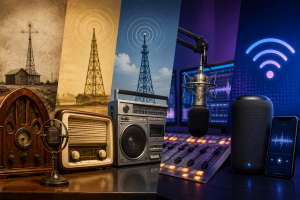
What makes radio logos so effective is their ability to balance simplicity with meaning. Clear design elements like microphones, sound waves, transmission towers, and abstract symbols help audiences immediately understand what the brand represents. These visual cues foster a sense of clarity and trust, making the station memorable in a crowded media landscape.
Today, Heart stands as one of the most successful examples of radio branding in the UK. Recent audience figures show the brand reaching more than 13 million listeners each week, making it the country’s biggest radio brand. Its success demonstrates how a strong visual identity, combined with engaging content and consistent marketing, can help a station grow from a regional broadcaster into a national powerhouse.
As radio continues to adapt to streaming, podcasts, and digital platforms, branding remains as important as ever. The most famous radio station brands have shown that a well-designed logo is much more than decoration. It serves as a visual shorthand for everything a station represents, helping audiences build lasting connections that can endure for generations. From the BBC to NPR and from iHeartRadio to Heart, these logos tell the story of broadcasting’s enduring power to connect people through both sound and design.