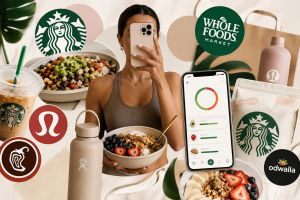
People have always wanted to be healthy. Although ideas about wellness and nutrition have certainly evolved over the years, in general there have always been societal notions about what it means to be in good health. But with the growth of information democratization, science at everyone’s fingertips, and the popularization of fitness alongside nutrition, the idea has taken on a whole new meaning.
A major part of this has to do with the content of our food. Understanding and perfecting our diets has become a veritable competition among people these days. Influencers will show you a food calorie counter that can optimize your food intake, there are apps to calculate portion sizes, nutritional content, and more. On the whole, we are turning into a hyper-fit society.
How did it happen?
It is worthwhile to step back and take a look at just how this shift occurred. Before the Internet age, there was certainly an emphasis on wellness (remember Jane Fonda workouts?). But the trend had nowhere near the level and complexity that it has now.
Several things started taking shape simultaneously to bring about the level of wellness obsession that we see today:
- The Internet made everything more visible. Suddenly, we were able to post pictures of ourselves for the entire world to see. Naturally, everyone wanted to look as good as possible, so those who weren’t in optimal shape started taking great pains to get there.
- The growth of analytical tools created an explosion in mathematical data related to everything in our lives. And nutrition was a big part of it. Because we are able to download these handy little apps onto our phones, everyone suddenly became an expert in food science.
- Influencers and sports stars made everyone else want to catch up with them. Because Simone Biles can have an Instagram page where she shows off her perfect form, so too can Jenny from the Block. Being fit and healthy started becoming associated with being cool. And for “foodies,” the opportunity to show off prize meals with perfect filters became irresistible (isn’t avocado toast prettier than a bunch of fries?).
- Wellness became a source of socializing online. When people post photos and videos
Where is it going?
As far as we can see at the moment, the trend is only continuing for the better. Things like “foodstagramming” are evolving into ever-more complex and interactive phenomena every day. People are both able to track what they eat, share their experiences with others, and obtain valuable feedback that helps them shape their future choices of foods. And the trends are getting more and more technical:
- AI-driven logging is shaping up. Computer vision technology is helping develop apps that will allow people to identify food items and optimize portion sizes simply through taking a photo. No expert consultation will be necessary.
- Continuous glucose monitors are becoming popular even among non-diabetics. We all need to watch our sugar intake, and these small wearable devices are helping people everywhere become more acutely aware of their sugar intake and how their bodies react to it.
- Apps are being developed that can match calorie intake with energy expenditure, ensuring that energy intake and output are perfectly optimized.
- Nutrigenomics is helping people determine their nutritional needs through DNA tests. Different body types have different nutritional needs, and this emerging science is allowing people to optimize their food choices according to their particular body composition.
- Biometric data integration allows people to coordinate everything that goes into being healthy into a single app: sleep, energy levels, even one’s mood on any given day.
- Smart kitchen appliances can track ingredients as they are used and notify people of advisable item choices and portion sizes.
Larger societal shifts
While not everyone is equally obsessed with the numbers, society in general is benefitting from the ubiquity of this wellness trend. Although not everyone aims to monitor the precise development of their microbiomes, the vast majority of the population at least knows that microbiome is a buzzword and has a general notion of what it means. This is a big step from a generation ago.
There are some concerning trends that we should pay attention to. The rise of GLP-1s like Ozempic are allowing pretty much anyone to instantly become thin. This both creates potential issues with food (sometimes people don’t eat enough of it), and also even further stigmatizes being overweight as it creates the notion that people “should” be able to get out of it easily. We as a society should be careful that we don’t come to expect everyone that has a weight problem to simply shoot themselves in the arm and become an instant supermodel.
The future is bright
Despite these concerns, the overall trend in health and food awareness is overwhelmingly positive for society. While junk food once ruled the land, it is becoming more and more frowned upon, and even restaurants like McDonald’s are being forced to alter their menus to keep up with the standards. As technology continues to develop, people will only become even more acutely aware of their nutritional needs. This will have an effect not only on people’s food intake, but it will help reduce the incidence of chronic diseases and cognitive decline. Hopefully, the phenomenon will become global.