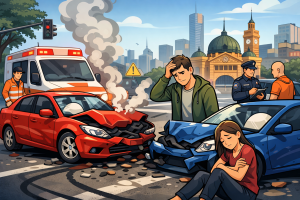
Experiencing a car accident on a busy Melbourne road is a high-pressure situation that requires a clear head and a methodical approach. Whether you are navigating the morning rush on the Eastern Freeway or a quiet suburban street, knowing the exact steps to take ensures you meet your legal obligations and prioritise everyone’s safety. Staying calm is the most effective tool you have during the moments following an impact.
By following a structured process, you can manage the scene efficiently and transition into the repair phase with minimal stress. This might involve an inspection at a motor vehicle assessment centre to determine the extent of the damage before moving forward. This guide outlines the immediate actions required by Victorian law and the practical steps to get your vehicle back on the road in top condition.
Safety and Legal Obligations
The very first priority is to stop your vehicle immediately. In Victoria, failing to stop after an accident is a serious offence. If it is safe to do so, move your car out of the line of traffic to prevent further incidents. Activate your hazard lights to alert other motorists and check yourself and your passengers for any injuries.
If anyone requires medical attention, or if there is a significant hazard like a fuel leak or damaged utility poles, call 000 without delay. Emergency operators will dispatch the necessary services to secure the site. If the road is blocked and causing a significant traffic jam, the police will usually attend to assist with vehicle recovery and traffic flow.
Exchanging Essential Information
Exchanging details is a mandatory part of the process. Approaching this with a professional and cooperative attitude makes the situation easier for everyone involved. You are required to share your information with the other drivers or any person whose property was damaged.
It is best practice to collect and provide the following:
- Full name and current residential address.
- A reliable contact phone number.
- The registration number of all vehicles involved.
- Details of the vehicle owner if they are not the person driving.
A quick and accurate way to do this is to take a clear photo of the other driver’s licence and their insurance documents. This avoids any transcription errors that could delay an insurance claim later. Additionally, taking photos of the vehicles from several angles, including the specific points of impact and the overall road layout, provides an objective record for your repairer and insurer.
When to Involve the Police
Not every minor bingle requires a police report at the scene. In Melbourne, you should call for police attendance if:
- Any person has been injured or killed.
- A driver appears to be under the influence of alcohol or drugs.
- There is significant damage to public or private property.
- A party involved refuses to provide their details.
If the police do not attend the scene, you may still need to report the accident at a local station, especially if you intend to make an insurance claim or if the damage is substantial. Having a police report number is a helpful addition to your documentation when starting the recovery process.
Managing the Towing Process
If your vehicle is not roadworthy after the accident, you will need to arrange for a tow. In many parts of metropolitan Melbourne, towing is managed through an allocation system to ensure scenes are cleared promptly.
When a tow truck arrives, verify that the driver has the correct accreditation. You have the right to nominate where your vehicle is taken. Rather than letting the car sit in a holding yard, you can request that it be transported directly to a specialist you trust.
Choosing a professional repair centre from the start ensures your vehicle is in expert hands immediately, which often speeds up the assessment process.
Transitioning to Repairs
Once the immediate scene is cleared, the focus shifts to restoring your vehicle. Modern vehicle repair is a technical process that involves more than just fixing a dent. It requires precise alignment and the recalibration of sophisticated safety systems.
When you choose a reputable repairer, you are investing in the long-term safety and value of your car. Technicians use high-quality materials and advanced equipment to ensure every panel fits perfectly and every safety feature functions exactly as the manufacturer intended.
Navigating Your Insurance Claim
Contact your insurance provider as soon as possible to lodge your claim. Having your photos and the details of the other parties ready will make this conversation straightforward. Many drivers are not aware that they often have the right to choose their own repairer. If you prefer a specialist known for craftsmanship and attention to detail, be sure to mention this to your insurer.
The Importance of Quality Craftsmanship
While a fast turnaround is important, the quality of the work is paramount. A professional repair ensures that the structural integrity of your vehicle is not compromised. In the event of any future incidents, the car’s crumple zones and safety sensors must be able to perform their roles correctly to protect you and your passengers.
Looking Forward
An accident is an unfortunate interruption, but it can be managed effectively with the right information and professional support. By staying organised at the scene and partnering with experts for your repairs, you can move past the incident with confidence.
It is a good idea to keep a basic incident kit in your glovebox, including a pen and your insurance policy number. Being prepared allows you to handle the unexpected with poise. Remember that while car damage is a nuisance, panels can always be replaced; your safety remains the most important factor.